
High-Current MOSFET Driver: Microchip TC4427COA Datasheet and Application Circuit Design
In modern power electronics, the ability to efficiently and rapidly switch power MOSFETs is critical for performance and efficiency. The Microchip TC4427COA stands out as a robust, high-speed, high-current MOSFET driver designed specifically for this demanding task. This inverting driver is capable of delivering peak currents up to 1.5A, making it an ideal choice for applications such as switch-mode power supplies (SMPS), motor controllers, and pulse transformers where fast switching speeds and minimal cross-conduction are paramount.
Key Specifications from the Datasheet
The TC4427COA is part of a family of 6N-type, single-channel drivers. Housed in a space-saving 8-pin SOIC package, its key electrical characteristics define its performance envelope:
High Peak Output Current: 1.5A (source and sink).
Fast Switching Speeds: Rise and fall times of 25ns (typical) into a 1000pF load, which minimizes switching losses in the MOSFET.
Wide Operating Voltage Range: 4.5V to 18V, offering flexibility in interfacing with various logic levels (e.g., 5V TTL/CMOS) and driving different MOSFETs.
Low Output Impedance: Typically 7Ω, enabling strong drive capability to quickly charge and discharge the large gate capacitance of power MOSFETs.
Latch-Up Protected: Can withstand >500mA of reverse output current.
High-Capacitive Load Drive: Can drive loads up to 10,000pF.
Inverting Logic: The output is the logical inverse of the input.
Application Circuit Design Considerations
Designing a reliable driver circuit with the TC4427COA involves more than just connecting a microcontroller pin to the input and a MOSFET's gate to the output. Several critical factors must be considered:
1. Gate Resistor Selection (R_G):
A series gate resistor between the driver's output and the MOSFET's gate is essential. Its primary roles are to:
Control switching speed and dampen ringing. A smaller resistor allows for faster switching but can cause overshoot, undershoot, and electromagnetic interference (EMI). A larger resistor slows switching, increasing heat dissipation in the MOSFET but improving noise performance. A value between 5Ω to 100Ω is common, requiring careful calculation or experimentation based on the specific MOSFET's gate charge (`Q_g`).
2. Power Supply Decoupling:
Due to the high peak currents and fast switching edges, effective decoupling is non-negotiable. A low-ESR (Equivalent Series Resistance) ceramic capacitor (0.1µF to 1µF) must be placed as close as possible to the `Vdd` and `GND` pins of the TC4427COA. A larger bulk capacitor (e.g., 10µF electrolytic or tantalum) should also be used on the power rail nearby to handle sustained current demands.
3. Layout Guidelines:
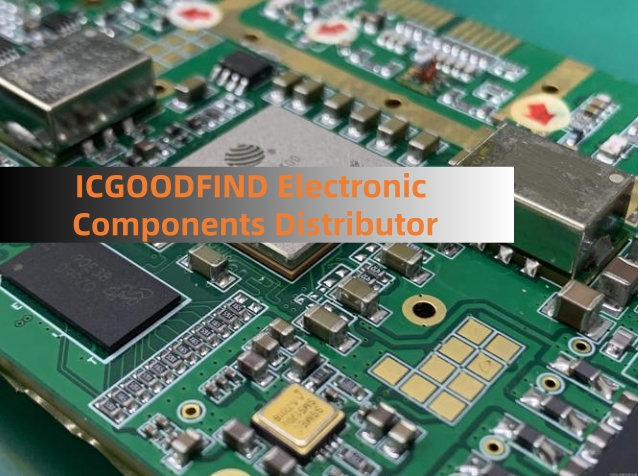
PCB layout is crucial for high-speed, high-current circuits.
Minimize Loop Areas: Keep the path from the decoupling capacitor to the driver's `Vdd` and `GND` pins extremely short. Similarly, the output loop (driver -> gate resistor -> MOSFET gate -> MOSFET source -> back to driver GND) must be as compact as possible to reduce parasitic inductance, which causes voltage spikes and ringing.
Use a Ground Plane: A solid ground plane provides a low-inductance return path and improves noise immunity.
Direct Connection to MOSFET: The driver should be located physically close to the power MOSFET it is driving to minimize trace length.
4. Dealing with Miller Effect:
During the switching transition, the `Miller capacitance` of the MOSFET can cause a voltage plateau on the gate waveform, prolonging switching time and increasing losses. The TC4427COA's high sink current capability is key to quickly discharging this capacitance and pulling the gate voltage through this plateau region.
A Basic Application Circuit
A typical application circuit is straightforward:
1. The input signal (e.g., from a PWM controller) is connected to pin 2 (`IN`).
2. Pin 3 (`GND`) and Pin 4 (`Vss`) are connected to the system ground.
3. Pin 6 (`Vdd`) is connected to the supply voltage (e.g., 12V) through the local decoupling network.
4. Pin 7 (`OUT`) is connected to the gate of the power MOSFET via the gate resistor `R_G`.
5. The source of the MOSFET is connected to the same system ground plane as the driver.
6. The load (e.g., a motor winding) is connected to the drain of the MOSFET.
ICGOOODFIND: The Microchip TC4427COA is a highly effective solution for driving power MOSFETs and IGBTs in high-frequency switching applications. Its exceptional combination of high peak current, fast switching speed, and robust construction makes it a reliable workhorse. Success hinges not just on the IC itself but on meticulous attention to decoupling, gate resistor selection, and PCB layout to harness its full potential and ensure system stability.
Keywords:
MOSFET Driver
High-Current
TC4427COA
Switching Speed
Application Circuit

